
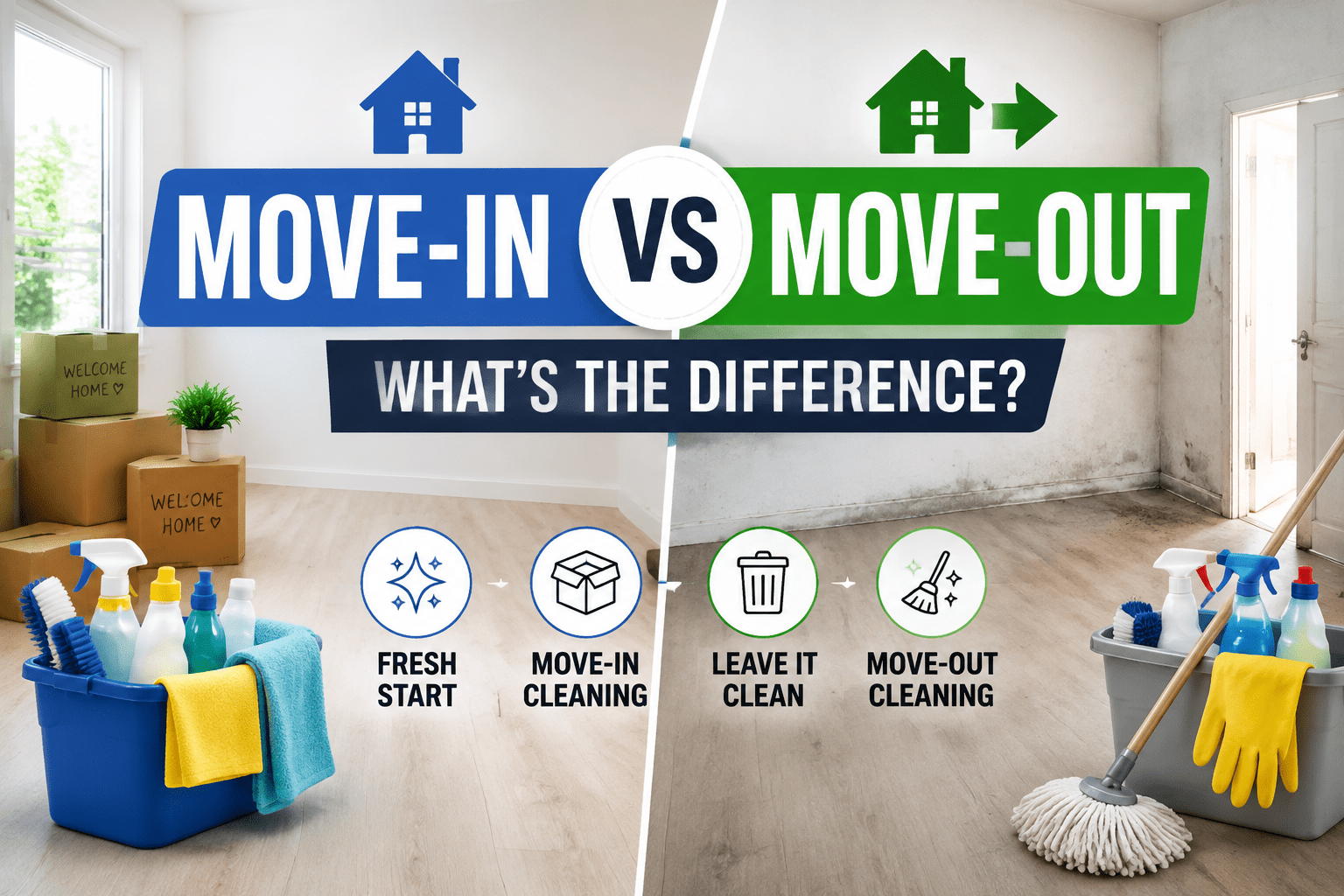
Moving is stressful enough without wondering whether you need a “move-in” clean, a “move-out” clean, or both. While the two services sound similar and often overlap in the tasks involved they’re designed for different goals, different timelines, and sometimes different people entirely. Understanding the distinction can save you money, avoid disputes with landlords, and make sure you actually walk into (or leave behind) a spotless space.
This guide breaks down exactly what each service covers, who typically needs it, and how to decide which one fits your situation.
The Short Answer
- Move-out cleaning happens before you leave a property. Its main purpose is to restore the space to a rentable or sellable condition — often to satisfy a landlord’s checklist and get your security deposit back.
- Move-in cleaning happens before you settle into a new property. Its main purpose is to make the space fully sanitized and comfortable for you, since you have no idea how thoroughly (or not) the previous occupants cleaned.
Both are deep cleans, far more intensive than a routine weekly tidy-up. But the intent behind each — protecting a deposit vs. protecting your health and peace of mind — shapes what gets prioritized.
Move-Out Cleaning: Leaving It Better Than You Found It
Purpose
Move-out cleaning (also called “end of tenancy cleaning”) is typically performed by the person or family who is leaving a rental property, or by a homeowner preparing a house for sale or new tenants. The primary driver is usually contractual: most leases require the unit to be returned in the same condition it was rented in, minus normal wear and tear.
What It Usually Includes
- Deep cleaning of kitchen appliances (inside and out) — oven, refrigerator, microwave, dishwasher
- Scrubbing cabinets, drawers, and countertops empty of any residue or crumbs
- Bathroom deep clean: grout, tile, tubs, toilets, and removing hard water buildup
- Baseboards, window sills, and light fixtures wiped down
- Removing nail holes’ debris, patching where required (sometimes billed separately)
- Vacuuming and mopping all floors, including under furniture (once it’s been moved out)
- Cleaning inside closets and cabinets
- Wiping down walls to remove scuffs and marks
- Dusting vents, ceiling fans, and light fixtures
- Removing all personal belongings and trash
Who Needs It
- Renters preparing to hand back keys and reclaim their security deposit
- Homeowners staging a property for sale
- Landlords or property managers turning over a unit between tenants
The Deposit Factor
For renters, move-out cleaning is often less about personal preference and more about avoiding deductions. Many landlords use a move-in/move-out checklist (sometimes with photos) to compare the property’s condition at the start and end of the lease. A professional move-out clean can serve as evidence that you fulfilled your obligations — and some cleaning companies even provide a receipt or checklist you can submit with your deposit return request.
Move-In Cleaning: Starting Fresh
Purpose
Move-in cleaning is performed before a new occupant brings in furniture and belongings. Because you don’t know how the previous tenant lived — or how well the move-out clean was actually done — a move-in clean is about giving yourself a truly blank slate, free of dust, allergens, and any lingering grime you didn’t cause.
What It Usually Includes
- Sanitizing all surfaces, including ones easy to overlook like door handles, light switches, and vent covers
- Disinfecting bathrooms and kitchens thoroughly, including inside cabinets and drawers before you fill them
- Cleaning inside the refrigerator, oven, and other appliances before first use
- Wiping down closets and shelving before boxes go in
- Vacuuming and mopping floors, particularly in carpets that may hold odors or allergens from previous occupants
- Checking and cleaning air vents and filters
- Removing dust from blinds, window tracks, and baseboards
- A general deodorizing pass, especially if the home had pets, smokers, or was vacant for a while
Who Needs It
- Renters moving into a new apartment or house
- Homebuyers who just closed on a property
- Anyone moving into a space previously occupied by someone else, especially if the prior cleaning quality is unknown
The Comfort Factor
Unlike move-out cleaning, move-in cleaning isn’t about satisfying a landlord — it’s about your own health and comfort. You’re the one who will be cooking in that kitchen, sleeping in that bedroom, and breathing that air. A thorough move-in clean reduces exposure to dust mites, pet dander, and cleaning product residue left behind, and it just feels better to start somewhere that’s genuinely yours.
Side-by-Side Comparison
| Factor | Move-Out Cleaning | Move-In Cleaning |
|---|---|---|
| Timing | Before you leave a property | Before you occupy a new property |
| Primary goal | Satisfy lease terms, protect deposit, prep for sale | Ensure a sanitized, comfortable start |
| Performed by | Departing tenant or seller | Incoming tenant or buyer (or previous owner as a courtesy) |
| Focus areas | Appliance interiors, walls, floors, removing all traces of occupancy | Sanitizing surfaces, allergen removal, deodorizing |
| Who benefits | Landlord, next tenant, buyer | You, the new occupant |
| Common trigger | End of lease, home sale closing | Start of lease, home purchase closing |
Do You Ever Need Both?
Yes — and this is where things can get confusing. If you’re a landlord or property manager turning over a unit, you might need a move-out clean after one tenant leaves and a move-in clean before the next tenant arrives, especially if there’s a gap between tenancies or if the move-out clean fell short.
If you’re an individual renter, you typically only pay for one side of the transaction: the move-out clean for the place you’re leaving. Whether you get a move-in clean for your new place depends on your lease and whether the landlord already handled it. It’s worth asking your new landlord directly whether the unit was professionally cleaned before you take possession — if not, budgeting for a move-in clean is a smart move.
How to Choose the Right Service
Ask yourself these questions:
- Am I leaving or arriving? This alone usually answers which service you need.
- Is there a lease clause about cleaning? Some leases specify professional cleaning is required at move-out — check before assuming a standard clean will do.
- Was the space vacant for a while? Vacant homes accumulate dust quickly; a move-in clean is worth it even if the previous tenant cleaned before leaving.
- Do I have pets or allergies? If so, a move-in clean with a focus on allergen removal is especially valuable.
- Is this a sale, not a rental? Sellers benefit from a move-out-style deep clean for staging and buyer walkthroughs; buyers often want a move-in clean regardless of how the home showed during the sale process.
Tips for Either Service
- Book early. Cleaning companies get busy around common moving dates (weekends, end of month), so schedule a few weeks ahead if possible.
- Empty the space first. Both move-in and move-out cleans are far more effective — and often cheaper — when the property is empty of furniture and boxes.
- Take photos. Before and after photos protect you in deposit disputes and give you a record of the property’s condition.
- Ask what’s included. Not all “deep clean” packages are equal — confirm whether appliance interiors, windows, and walls are part of the standard service or an add-on.
- Consider a checklist. Many cleaning services provide a move-in/move-out checklist. Request one so nothing gets missed.
Final Thoughts
While move-in and move-out cleaning share many of the same deep-cleaning tasks — scrubbing appliances, sanitizing bathrooms, wiping down every surface — they serve fundamentally different purposes. Move-out cleaning is about closing a chapter responsibly, satisfying lease obligations, and protecting your deposit. Move-in cleaning is about opening a new one with a genuinely clean, healthy space to call home.
Knowing which one you need — and sometimes recognizing you need both — takes the guesswork out of moving day and ensures nothing falls through the cracks during one of life’s most hectic transitions.
