
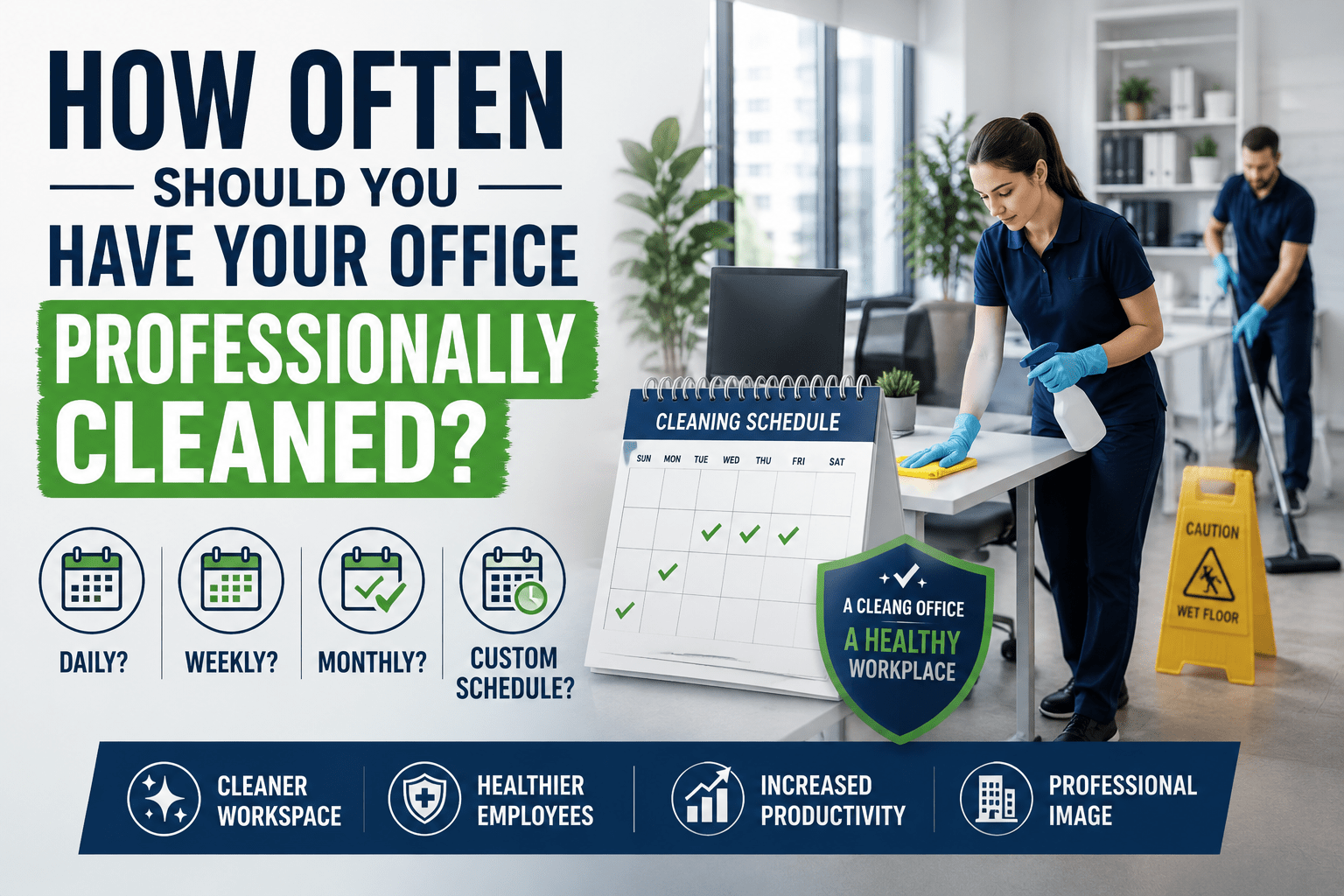
How Often Should You Have Your Office Professionally Cleaned?
Picture this. It is Monday morning, coffee in hand, and you walk into your office ready to tackle the week. Instead of a fresh, energizing space, you are greeted by dusty desks, a break room that smells faintly of last week’s lunch, and carpets that have seen better days. Within minutes, your motivation dips and so does your team’s. That sinking feeling is more common than you might think, and it usually comes down to one overlooked question: how often is your office actually being professionally cleaned?
Most business owners assume cleaning is cleaning, something you schedule once and forget about. In reality, the right frequency depends on a surprising number of factors, and getting it wrong can quietly cost you in ways you might not expect, from employee sick days to the impression you leave on visiting clients. Let’s dig into what really determines how often your office needs a professional touch, and how to build a cleaning schedule that actually works for your space.
Why Cleaning Frequency Matters More Than You Think
A clean office is not just about appearances, although first impressions certainly count for a lot when a potential client walks through your door. The real story is in what you cannot see. Office spaces harbor bacteria, allergens, and dust that accumulate quietly on keyboards, phones, doorknobs, and shared surfaces. Studies on workplace hygiene have consistently shown that offices can carry more germs per square inch than many public restrooms, largely because desks and communal areas are cleaned far less rigorously than we assume.
Beyond health, cleanliness affects morale and productivity. Employees who work in a tidy, fresh smelling environment tend to feel more focused and less stressed, while cluttered or grimy spaces can contribute to a subtle sense of chaos that follows people into their tasks. Cleaning frequency, then, is not a cosmetic decision. It is a business decision that touches health, reputation, and performance all at once.
The Factors That Determine Your Ideal Cleaning Schedule
There is no single answer that fits every workplace, because offices are not one size fits all. A boutique law firm with ten employees has very different needs than a busy call center with three shifts running around the clock. Several factors shape how often you should bring in the professionals.
Foot traffic is one of the biggest drivers. The more people moving through your space each day, including employees, clients, and delivery personnel, the faster dirt, dust, and germs accumulate. A small office with a handful of staff might comfortably go a week or two between deep cleans, while a busy retail adjacent office or a space with constant visitor flow may need attention several times a week just to keep surfaces presentable.
Industry also plays a major role. Medical offices, dental practices, and any workplace dealing with the public in a health related capacity typically require daily or even multiple daily cleanings to meet hygiene standards and reduce liability. Food related businesses face similar demands. On the other end of the spectrum, a quiet design studio or a remote first company with a small in office team can often stretch cleanings out further without sacrificing cleanliness or safety.
The size and layout of your space matters too. Open floor plans with shared desks and communal kitchens tend to get dirty faster than compartmentalized offices with private rooms, simply because more people are touching the same surfaces throughout the day. Carpeted offices generally need more frequent vacuuming and periodic deep cleaning compared to hard flooring, which is quicker to maintain but still needs regular mopping and disinfecting.
Finally, consider the season and local environment. Offices near construction sites, busy streets, or areas with high pollen counts often need more frequent dusting and air quality attention. Flu season is another moment where many businesses choose to increase cleaning frequency temporarily, adding extra disinfection of high touch surfaces like doorknobs, light switches, and shared equipment.
A General Framework to Work From
While every office is different, most commercial cleaning experts suggest breaking your cleaning plan into layers rather than a single frequency. Daily attention should cover the basics that keep a space functional and presentable, things like emptying trash bins, wiping down kitchen and bathroom surfaces, and vacuuming or sweeping high traffic areas. This is the baseline that prevents small messes from becoming bigger problems.
Weekly cleaning typically goes a layer deeper, covering thorough dusting, disinfecting shared equipment such as printers and phones, cleaning glass surfaces and mirrors, and giving floors a more complete treatment. For many small to mid sized offices, this weekly rhythm paired with light daily upkeep strikes the right balance between cleanliness and cost.
Monthly or quarterly service is where deep cleaning comes in. This includes carpet shampooing, upholstery cleaning, window washing, and detailed attention to areas that do not get touched during regular visits, like air vents, baseboards, and behind furniture. Even offices that feel clean on the surface benefit enormously from these periodic deep cleans, since dust and allergens build up in places routine cleaning simply does not reach.
Larger facilities, medical spaces, and businesses with heavy public traffic often need a hybrid approach, blending daily service with more frequent deep cleaning cycles rather than waiting for a quarterly visit.
Signs You Might Be Overdue
Sometimes the clearest signal that your cleaning schedule needs adjusting comes from your own team. If employees start mentioning allergies or headaches that seem to improve when they work from home, dust and air quality could be the culprit. A persistent odor that air freshener cannot mask, visible grime building up on high touch surfaces, or an uptick in minor illnesses moving through the office are all red flags worth paying attention to. Clients or visitors commenting on the state of your space, even in passing, is another strong indicator that it is time to revisit your cleaning frequency.
Finding the Right Balance for Your Business
The goal is not to clean as often as humanly possible, since over cleaning can be an unnecessary expense without meaningful benefit. Instead, aim for a schedule that matches your actual usage patterns and risk factors. A good commercial cleaning provider will walk your space, ask about your foot traffic and industry requirements, and help you build a customized plan rather than pushing a generic package.
It is also worth revisiting your schedule periodically rather than setting it once and forgetting about it. As your team grows, your office layout changes, or seasons shift, your cleaning needs will shift right along with them. Treating your cleaning plan as a living part of your operations, rather than a static line item, ensures your space stays consistently welcoming and healthy.
The Bottom Line
There is no universal rule that tells every business exactly how often to schedule professional cleaning, but there is a reliable way to figure it out. Look at your foot traffic, your industry, your layout, and the signals your team and clients are already giving you. Build a layered plan that covers daily basics, weekly maintenance, and periodic deep cleaning, and stay willing to adjust as your business evolves. Do that, and your office will do more than just look clean. It will support the health, focus, and confidence of everyone who walks through the door.
